
Easy
What is the most expensive NFT in the world?
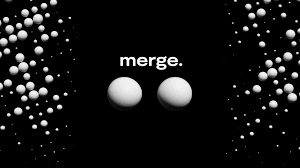
The world's most expensive NFT is a digital artwork called "The Merge," created by the artist Pak and sold for $91.8 million. This record was set in December 2021 on the Nifty Gateway platform ( official source ). This spectacular sale raises many questions about the true value of NFTs (non-fungible tokens) and the mechanisms that justify such prices.
Table of Contents
The world's most expensive NFT: How can such a price be explained?
The NFT market is based on a fundamental principle: digital scarcity . Unlike cryptocurrencies such as Bitcoin or Ethereum , which are interchangeable (fungible), an NFT (non- fungible ) is unique . It can represent a work of art, a collectible, or even an in-game asset. Its value is therefore determined by supply and demand , with scarcity often being a key factor.
In the case of "The Merge ," this uniqueness is not based on a single NFT sold to a single buyer, but on a novel concept: a fractional , scalable, and dynamic NFT. Several factors contributed to its record price of $91.8 million .
- The artist Pak , a figure in the NFT world, had already sold several works for several million dollars, reinforcing the credibility and collectors' interest in "The Merge".
- An innovative sales model based on units called " masses ", which buyers could acquire individually or in groups.
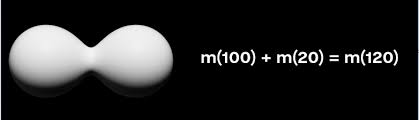
- A unique merging mechanism where the more "masses" a buyer owned, the more they merged to form an increasingly larger NFT.
- A sale that took place in the midst of crypto euphoria at the end of 2021, when investors were ready to spend colossal sums on digital assets.
The key element here is that "The Merge" is not a single NFT but a set of fractional tokens purchased by 29,983 collectors , totaling 312,686 units ("masses") . Each holder has a "portion" of the artwork, which fluctuates based on acquisitions and resales on the secondary market.
A work of art that merges with time
One of the most distinctive aspects of "The Merge" is its programmed merging mechanism . Unlike traditional NFTs, where each token remains separate, here, the quantities purchased by the same user automatically merge into a single, larger NFT .
In other words:
- If a buyer owned 3 masses and acquired 2 more, their NFT did not remain composed of 5 separate units, but merged into a single larger entity .
- This visual fusion was represented by white spheres that grew larger as the buyer accumulated masses.
- The larger the "mass," the more its owner distinguished themselves in the community, creating a phenomenon of competition among collectors .
This innovative concept encouraged behavior similar to FOMO ( Fear Of Missing Out ), where some investors sought to accumulate as much "mass" as possible to dominate the collection and obtain a work more imposing than others.
A market under the influence of speculation
When NFTs exploded in popularity in 2021, they became highly speculative assets . Some buyers saw them as a new investment class , while others were banking on the fad to resell their acquisitions at a higher price.
More information about the rewards can be found here.
"The Merge" benefited from this momentum, particularly thanks to:
- With intense media coverage , making this event a key moment in the history of NFTs.
- The arrival of influential collectors , who helped drive up the bids.
- The innovation of the fractional model , which gave the impression that a large audience could participate in a single work, created a new dynamic of engagement.
However, the rarity of "The Merge" was partially artificial . Unlike a physical work of art which is naturally unique, here it was the mechanics of merging and the branding around the artist Pak that created this perceived rarity .
A new artistic and financial experience
"The Merge" is a dynamic artistic experiment where the notion of digital ownership is constantly evolving . It is a work without a fixed form , as it changes with each transaction and depends on the decisions of the buyers.
But this model also raises questions:
- Can a fragmented work have the same value as a single NFT like Beeple's "Everydays"?
- If each buyer resells their masses individually, is the value of the whole still legitimate?
- Is the enthusiasm for these new mechanics based on genuine artistic innovation or simply on a speculative bubble?
In retrospect, the 2022-2023 NFT market crash revealed that many of these purchases were driven by speculation , not purely artistic or cultural appreciation. Nevertheless, the impact of "The Merge" will remain etched in the history of digital art, not only as the most expensive NFT ever sold in terms of cumulative value , but also as a project that redefined how we perceive ownership in the Web 3D world .
World's most expensive NFT: Other exceptional sales
Everydays: The First 5000 Days
Before "The Merge," the most publicized work was "Everydays: The First 5000 Days" by the artist Beeple (Mike Winkelmann), which sold for $69.3 million in March 2021 at Christie's ( official source ). It is a collage of 5,000 images that the artist created daily for more than 13 years.
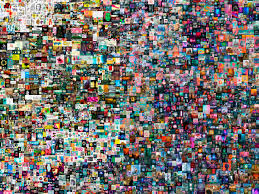
This consistency and the fact that it was the first NFT sold by Christie's largely contributed to its success:
- The innovative aspect of selling an NFT in a prestigious auction house.
- International media coverage surrounding Beeple.
- The remarkable artistic journey (13 years of daily production).
This sale propelled Beeple to the ranks of the world's most expensive artists and highlighted the rise of the non-fungible token as a legitimate art form.
Clock: Political Engagement
Another striking example is "Clock," an NFT created by the artist Pak in collaboration with Julian Assange. Sold for $52.7 million, it takes the form of a clock counting the days of the WikiLeaks founder's detention. In this case, the activist dimension played a decisive role in its valuation: more than 10,000 people contributed to its funding.
Human One: Sculpture in perpetual motion
Beeple's "Human One," sold for $28.9 million in November 2021, is a UFO in the landscape: this work combines a 3D digital sculpture representing a visually constantly evolving astronaut, and an NFT that allows Beeple to modify the virtual environment around this astronaut.
The world's most expensive NFT: CryptoPunks, pioneers and benchmarks
While massive sales linked to iconic artists like Pak or Beeple are often discussed, there are also historical collections that have become cult classics in the world of NFTs. CryptoPunks, launched in 2017 by Larva Labs ( official source ), are considered one of the first series of non-fungible tokens on the Ethereum . Each of these 10,000 small pixelated characters has various attributes (glasses, hats, masks, etc.), some of which are particularly rare and therefore highly sought after.
Among the CryptoPunks sold at exorbitant prices are:
- CryptoPunk #5822, sold for $23.7 million.
- CryptoPunk #7523, nicknamed "Covid Alien", at $11.8 million.
- CryptoPunk #4156, sold for $10.26 million.
Why are they so expensive?
Several factors explain their price:
- Rarity: certain visual characteristics (alien skin, beanie, etc.) are present on a very limited number of Punks.
- Historical collection: being one of the first collections, it enjoys an aura of "pioneering" in the world of NFTs.
- Speculation and status effect: owning a rare CryptoPunk means displaying a certain status within the crypto community.
Supply and demand dynamics also play a role. Many collectors keep their CryptoPunks, which further increases the value of those that come up for sale.
More information about the rewards can be found here.
The world's most expensive NFT: A closer look at the underlying technology
Blockchain and ownership certificates
To understand how a digital asset can sell for millions of dollars, it's important to grasp the technical mechanics: an NFT is generally issued on a blockchain, often Ethereum , via a smart contract . This smart contract records all transactions related to the token, thus guaranteeing:
- Traceability: every sale, every change of ownership is recorded in the blockchain.
- Authenticity: we know exactly what the original is and what the possible copies are.
- Immutability: this information is unforgeable as long as the blockchain remains decentralized and secure.
This technical security strengthens investor confidence, allowing them to invest significant sums while being certain they possess the "official" document. In an increasingly digital world, this proof of ownership is often compared to a traditional property title, the difference being that it resides on a decentralized network.
Smart contractand programmability
NFTs can also be programmed to perform specific actions. For example, an artist can include in the contract code the option to receive a percentage (royalty) on each future resale of their artwork. For "The Merge," Pak used this logic to merge the tokens acquired by different buyers over time. Other projects feature game mechanics, collaborations between artists, or even secret functions that are revealed after a certain number of transactions.
This programmability explains why the NFT market isn't limited to art: NFTs are now found in the metaverse, decentralized finance ( DeFi ), virtual real estate, and even video game licenses. The concept therefore goes far beyond simple images of monkeys or pixelated punks.
Focus on fractional ownership
The concept of fractional ownership, widely popularized by "The Merge," could become more widespread in the future. The idea is to allow multiple investors to buy shares of the same NFT, thus making the purchase of very expensive works more accessible. The shares are represented by several tokens linked to the original work. Therefore, one can imagine a high-value digital asset not being owned by a single person, but by hundreds, or even thousands, of co-owners. This model, similar to asset tokenization, is being studied extensively in the DeFi sector and could be applied to other markets (real estate, music licenses, etc.).
World's most expensive NFT: Critical reassessment, speculative bubble or cultural transformation?
The fact that an NFT sells for over $90 million inevitably sparks debate about the sustainability of this market. Several questions arise:
- Is the NFT market based on genuine innovation or simply on the hope of future added value?
- Do collectors buy these works for their artistic value or solely for the purpose of speculation?
- How do you value an asset whose scarcity is often determined by a code, therefore artificially?
Following the boom of 2021, the market experienced significant fluctuations in 2022 and 2023. Sales volumes sometimes declined, and many projects saw their value plummet. Despite this, some leading NFTs retain enormous appeal.
A market in search of maturity
As regulations become clearer and decentralized finance evolves, the sector is becoming increasingly professional. Major players in traditional art, such as Christie's and Sotheby's, continue to explore this niche, while new specialized platforms are emerging. NFTs are no longer confined to the tech world: they now reach luxury brands, sports teams, museums, and even music labels.
It is in this context that analysts believe NFTs could have a long-term future. However, caution is still advised: like cryptocurrencies, these assets remain extremely volatile.
The world's most expensive NFT: Is it still possible to invest in NFTs?
Although "The Merge" remains the most expensive NFT in the world, many other interesting projects are available at much more affordable prices. Before investing, it's important to follow certain steps:
- Do your own research: analyze the team behind the project, the community around the work, the resale history.
- Verify authenticity: always check the smart contract and make sure you buy a verified NFT from a reliable marketplace (OpenSea, LooksRare, Rarible, Nifty Gateway, etc.).
- Define a strategy: is this a long-term purchase driven by passion or a investment ? Identify your time horizon.
- Establish a realistic budget: only invest money you are prepared to lose, as volatility is very high.
The growing role of alternative blockchains
While Ethereum remains the most popular blockchain for issuing NFTs, other networks are gaining ground, notably Solana , Polygon , and BNB Chain. Each blockchain offers advantages in terms of transaction fees, speed, and user communities.
The place of the metaverses
Another factor that can influence the value of certain NFTs is their integration into the metaverse. Several virtual worlds (The Sandbox, Decentraland, etc.) offer the possibility of building galleries, creating gaming experiences, or monetizing digital properties. In these universes, NFT objects and artworks are integrated in an immersive way. Some investors see the rise of the metaverse as a driver of continued growth for digital collections, thus increasing demand and, consequently, the potential price of certain pieces.
World's most expensive NFT: Analysis, predictions and outlook
It would be risky to predict whether a new NFT will surpass "The Merge" at $91.8 million. Crypto market cycles are known for their extreme volatility. However, some indicators suggest that the concept of non-fungible tokens is here to stay:
- Institutional adoption: large companies are testing NFTs for their marketing campaigns or the sale of exclusive digital products.
- Cultural evolution: a growing number of digital artists are adopting this format, seeing it as a way to fully live off their art without traditional intermediaries.
- Generation Z and Y: the youngest see NFTs as a natural extension of their online interactions, particularly in games or social networks.
A niche market or a new ecosystem?
Despite their growing popularity, some argue that NFTs will remain a relatively niche market segment, attractive to crypto and art enthusiasts, but without any real mass impact. Others, on the contrary, believe that the tokenization of all types of assets (art, real estate, intellectual property rights) will profoundly transform how we own, exchange, and consume. In this view, record-breaking sales like "The Merge" are merely a taste of a much broader movement.
Conclusion: a very fragile, rapid growth
In summary, the world's most expensive NFT remains "The Merge" by Pak, with a colossal price of $91.8 million. This record illustrates the power of speculation, the strength of the concept of digital scarcity, and the contribution of blockchain to ownership certification. It also testifies to the extreme volatility of the sector: this same market, which broke records in 2021 and early 2022, experienced periods of decline, proving that NFTs are not a guaranteed gold mine.
Cryptocurrency investments are risky. Crypternon cannot be held liable, directly or indirectly, for any damage or loss resulting from the use of any product or service mentioned in this article. Readers should conduct their own research before taking any action and only invest within their financial means. Past performance is not indicative of future results. This article does not constitute investment advice.
Some links in this article are referral links, which means that if you purchase a product or sign up through these links, we will receive a commission from the referred company. These commissions do not incur any additional cost to you as a user, and some referrals give you access to promotions.
AMF Recommendations. There is no guaranteed high return; a product with high potential returns implies high risk. This risk must be commensurate with your investment goals, your investment horizon, and your ability to lose some of your savings. Do not invest if you are not prepared to lose all or part of your capital .
To learn more, read our Legal Notices , Privacy Policy and Terms of Use .

Yoann
Trained as an engineer, I quickly became interested in the field of finance. Convinced that decentralized finance has a bright future, I am participating in its democratization by developing Crypternon.